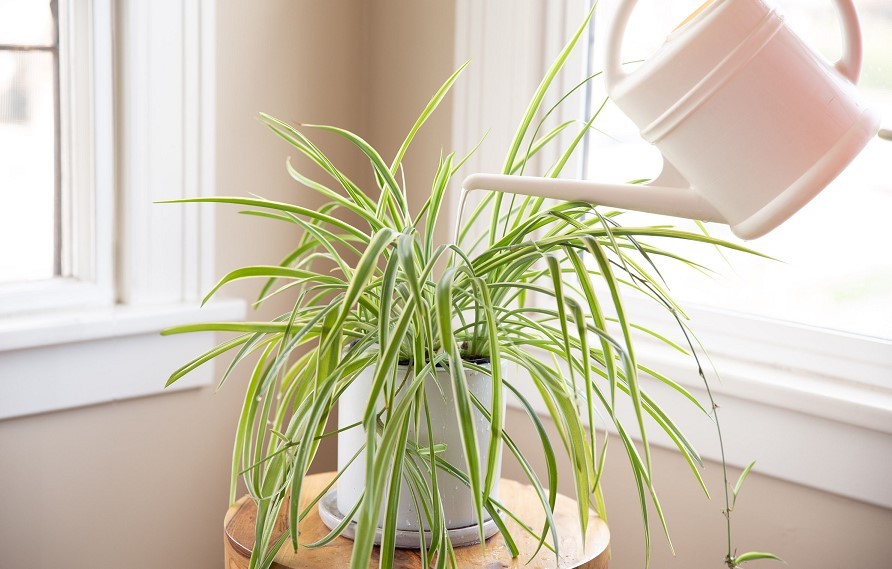
One of the main causes of indoor plant death is overwatering. That includes your spider plant.
Overwatering a spider plant is worse than underwater spider plants because spider plants are susceptible to root rot, which can lead to death. An underwatered spider plant may look almost uncannily the same as an overwatered one.
Mistakes do occur. Unfortunately, overwatering your spider plant will result in brown blotches, yellow leaves, stunted development, and other problems. In the worst case, overwatering may promote lethal root rot. You must be able to recognize the warning indications of overwatering and resuscitate your overwatered spider plant.
Signs and Symptoms of an Overwatered Spider Plant
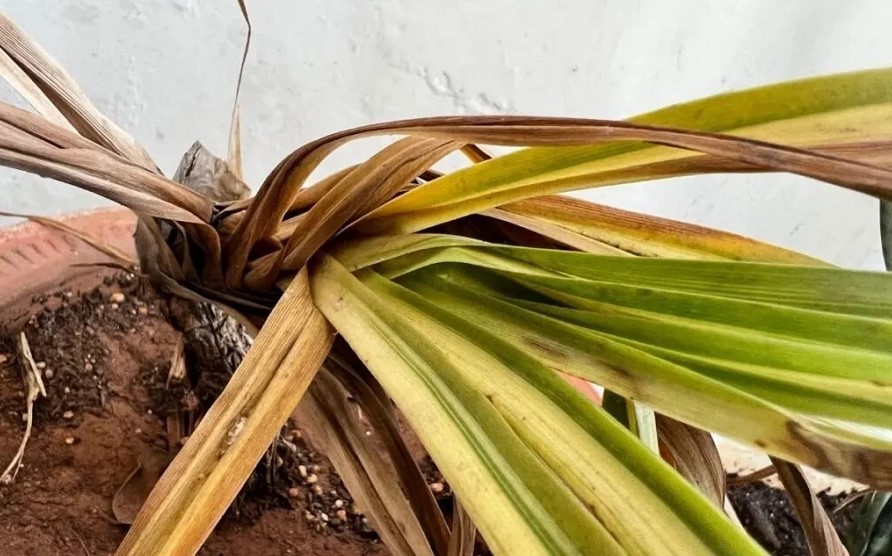
Overwatered spider plants frequently appear hungry, discolored, and on the verge of death. There were some yellow leaves, some brown tips, and some brown spots on the leaves.
Additionally, it’s possible for the leaves to wilt, mush, and curl.
Even under conditions that are thought to be particularly harsh, spider plants can survive. It can tolerate adverse conditions like inadequate lighting, barren soil, neglect, and desert-like settings. Your spider plant will, however, perish if you give it too much water.
Common Overwatering Symptoms in Spider Plants
The leaves are yellowing
When you initially overwater your spider plant, the foliage will turn pale or light green. The leaves will soon start to turn yellow as a result of this. The bottom leaves of your plant are where the issue first appears.
Without taking any corrective action, overwatering a spider plant will cause a substantial portion of the leaves to yellow, wilt, and fall off. This is often an indication of severe root rot brought on by waterlogging and excessive plant watering.
However, you should be aware that a wide range of additional conditions can also make the spider plant’s leaves become yellow. Before moving on, it is necessary to rule out all potential causes, including mineral deposits, edema, insect infestations, diseases, sunburn, nutrient deficits, and even underwatering.
Microbial, damp, and squishy soil
Immediately examine the soil if you notice odd leaf yellowing. In general, overwatered soil is too wet, squishy, and waterlogged. The root system will be drowned and destroyed if this is left unchecked, and it will also create the perfect habitat for the development of lethal root rot.
As a result of the prolonged wetness, fungi will also begin to proliferate. Mold, mildew, and other types of fungal spores may be present in wet soil.
Any Soft or Fluffy Leaves
In addition to turning yellow, overwatered spider plants also show signs of edema on their leaves and stems. You might notice areas that are soft, wet, and mushy. The stems and foliage frequently appear bloated or inflated.
Leaves with Brown Spots
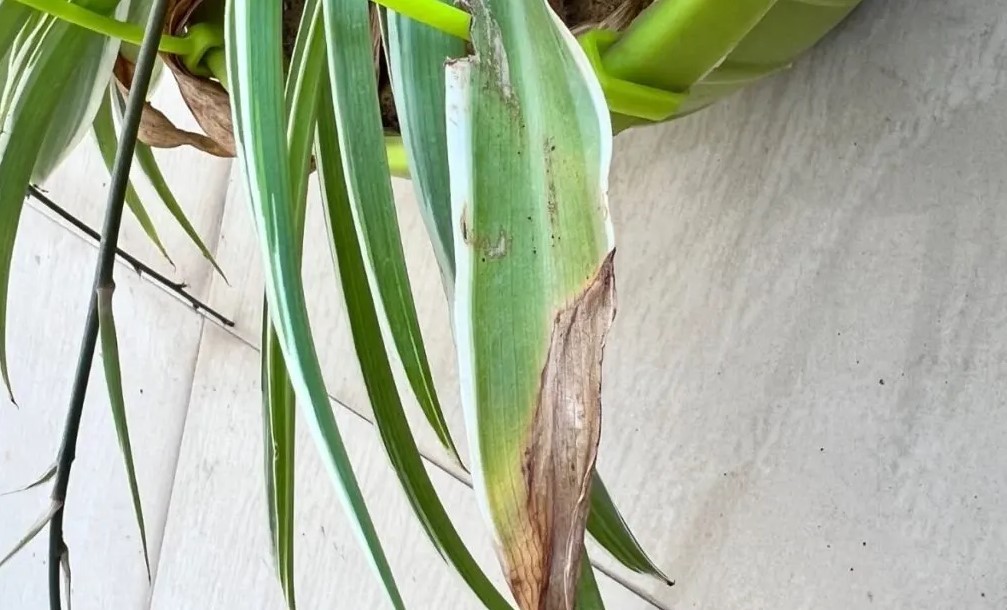
Reduce the amount of water your spider plant receives if you notice brown leaf tips under careful inspection. The spots will start off as tiny, rusty flecks and then enlarge into enormous, browning leaf tips. They can appear to be covered in water and have a golden aura surrounding them.
Wilting leaves
Both the pattern and the severity of the withering depend on how much water is applied. If you keep watering the plant without giving the soil a chance to dry up, the leaves will start to wilt. The withered leaves are floppy, puffy, and mushy.
Wilting happens when the soil’s drainage holes become filled with excess water. This causes the plant’s roots to become soggy, which promotes the growth of root rot. The leaves wilt as a result of the root system’s inability to efficiently absorb excess water.
Dropping Leaves
If you’re a gardener, you presumably already know that leaves naturally fall off as they age. It makes space for the plant to later generate new leaves.
The spider plant leaves will almost all fall off the plant at once when there is an issue with excessive watering.
Appearance: mushy and shriveled.
The spider plant will appear withered and mushy as a whole. This results in the softening and puffing of leaves, stems, and other plant parts and is brought on by edema, root rot, and tissue damage. Remove any diseased or damaged leaves.
Rotten roots
The presence of fungus infection is one of the waterlogging symptoms that are most obvious. When air pockets in the soggy soil are filled with too much water, the roots are drowned. Weak and dead roots are more likely to cling to infected roots, especially fungal infections and other conditions that cause deadly root rot.
When roots are diseased, they appear dark brown or black and feel mushy and squishy to the touch. They immediately fall off and give off a sewer-like putrid smell.
Spider Plant Leaves that Curl
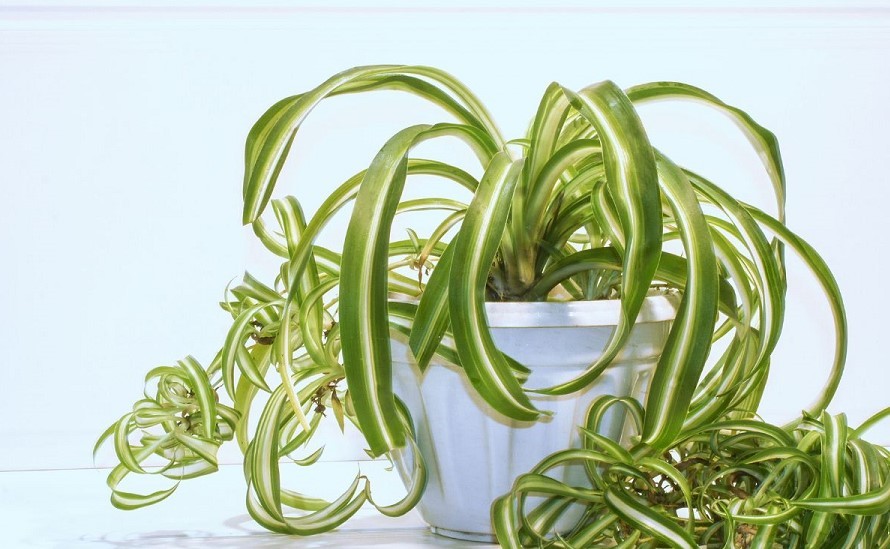
The leaves of a spider plant may contract, curl, and wrinkle when given an excessive amount of water. This is a result of the root system being injured, which stops it from taking in enough water.
Leaf’s edge browning
Brown tips on the leaves can be a symptom of overwatering. The tips and margins of spider plant leaves are pressed with water. Additionally, if you overwater your plant, the veins will break and the spider plant will eventually turn brown.
Pest infestation
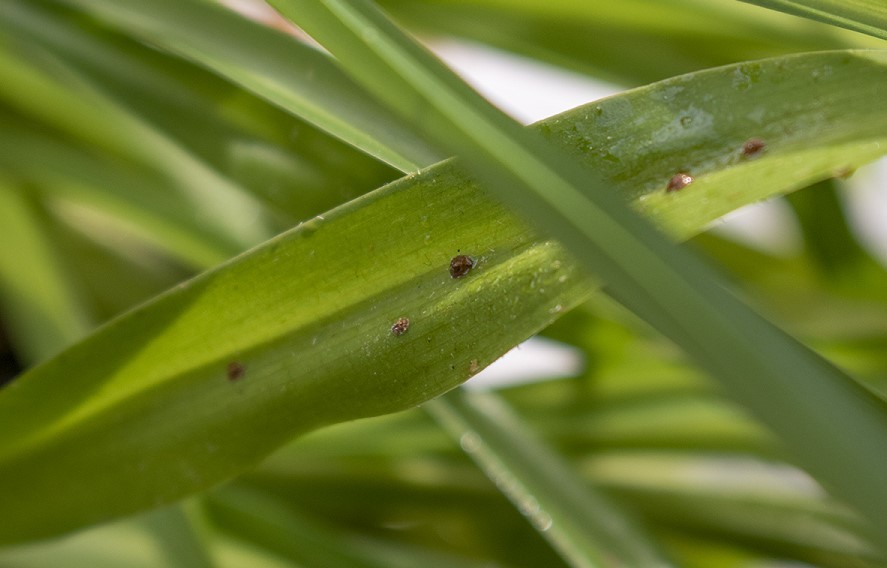
Many different insects, such as mealybugs, scale, white flies, aphids, and fungus gnats, prefer warm, moist settings to breed. The absence of oxygen suffocates the roots of the plant and fosters fungal growth. Therefore, the presence of pest infestation on the leaves, especially on the underside, is a sign that the spider plant has had a lot of water.
How to Save and Revive an Overwatered Spider Plant
Stopping the plant’s irrigation right away is the first step in preserving an overwatered spider plant. You can also tilt the spider plant container to drain the contents if the soil is still standing in water.
Whether root rot was present when you discovered the watering problem will determine the next steps you need to take to resuscitate the spider plant.
It can endure harsh lighting and conditions that are close to a desert, but it should never be overwatered. You killed your spider plant by applying too much water, in this case.
If the roots of your spider plant are sticky, smell awful, or are a brown or black color, they are rotten as a result of overwatering.
Spider Plant Root Rot Treatment: Step-by-Step Revival Guide
- Wash out the soilWash out the soil by running water under a faucet after uprooting the spider plant and determining that the plant’s roots have rotted. The worst-damaged root parts that have had severe root rot will be uprooted as the water eliminates the soil.High-pressure cleaning should be avoided, though, since it could harm the portions of the root system that are still in good shape physically.
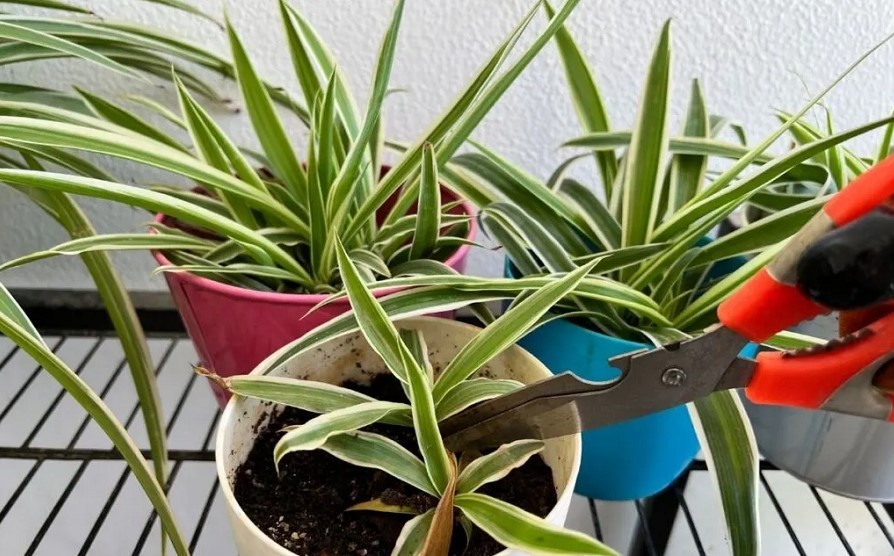
- Cut out diseased rootsEven after washing the roots of the spider plant, some rotten parts would remain attached to the rot system. These should also be removed, along with any wilting or yellowing leaves, using a pair of clean shears.When you’re finished, there should only be white, healthy roots left. The pot in which your spider plant grows needs to have drainage holes to allow excess moisture to run out.
- Reduce foliageTo account for the root loss, prune back some of the spider plant’s top growth. This is due to the possibility that the spider plant’s remaining number of leaves will not be adequately supported by the remaining roots.
- Medicate the root causeUsing a commercial fungicide solution, clean the remaining root part. Try a natural fungicide solution containing cinnamon and activated charcoal if you’re concerned about the effects chemical products will have on the environment.
- Plant repotting and appropriate wateringReplace the old substrate with a new potting mix enhanced with organic components before repotting the spider plant. Irrigate the plants after repotting until water emerges from the drainage pores. The overwatered spider plant won’t start to show symptoms of recuperation for about 10 days.
Restoring an Overwatered Spider Plant Without Root Rot
With the exception of root rot, if your overwatered spider plant exhibits all the aforementioned symptoms of overwatering, it may just be in the early stages of moisture damage. Simply dry out the soil around the plant by placing it in direct sunlight. To stop the wilting from starting, mist the leaves.
Before repotting, clean the soil with a fungicide since even in the absence of root rot, the fungus can still exist in the soil. They could still be growing and eventually lead to root degeneration.