
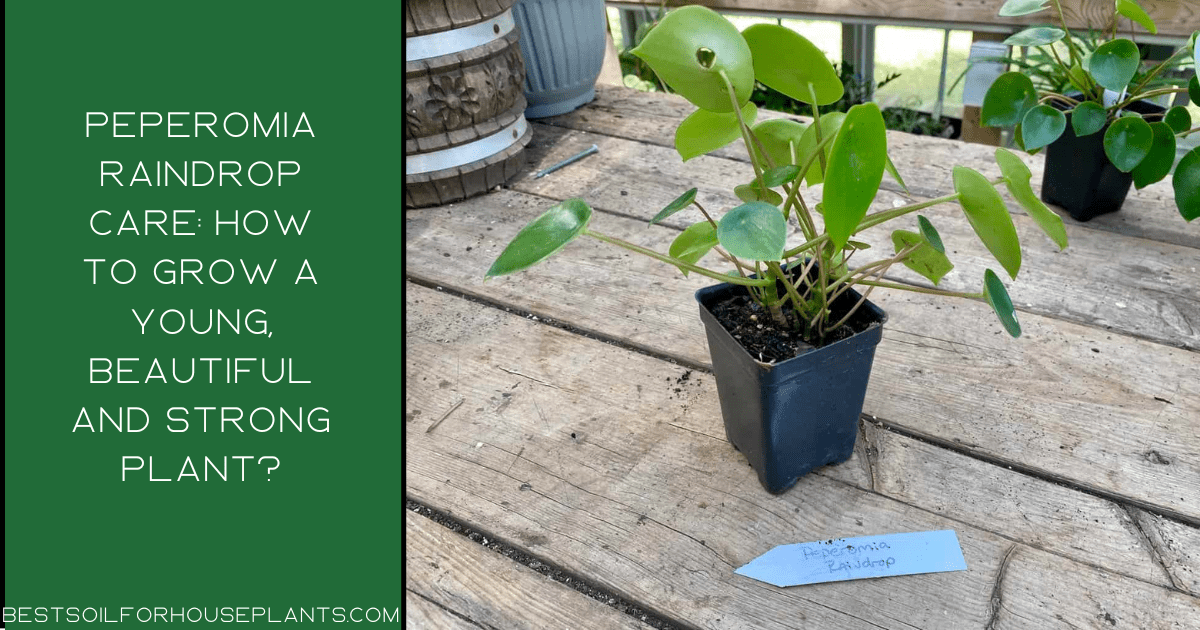
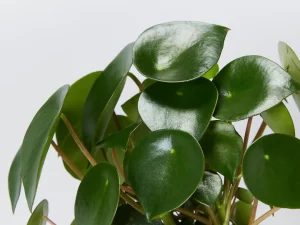
Quite often, a charming plant is found on the windowsills in houses – Peperomia Raindrop (official name Peperomia Polybotrya Raindrop). It differs from other flowers in that it has leaves that resemble drops in shape. This popular houseplant is prized for its glossy, heart-shaped foliage and easy-care nature. More about Raindrop Peperomia care you can read in this article.
Essential Peperomia Raindrop Care Guide: Growing Healthy Polybotrya Plants
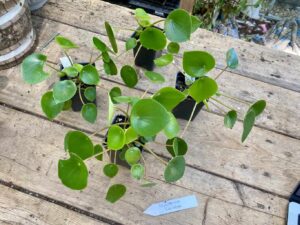
Frequently, gardeners think about Peperomia Raindrop care. Peperomia Polybotrya is not very demanding for care, making it an ideal houseplant for beginners and experienced plant enthusiasts alike. However, several recommendations should be followed to ensure your raindrop plant thrives indoors.
Peperomia Raindrop Care Requirements: Quick Reference Guide
Raindrop Peperomia has the following care requirements:
- the bright and indirect light;
- watering is carried out when the soil is dry;
- availability of ventilated and well-drained soil;
- transplantation with an interval of several years;
- high indicators of humidity;
- temperature requirements – 65 °F to 80 ℉;
- application of fertilizers during the growing season;
- the need for periodic pruning.
More details about all the stages of care we describe below.
Peperomia Raindrop Light Requirements: Finding the Perfect Spot
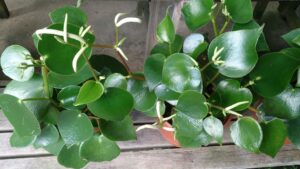
Raindrop Peperomia plants prefer to grow in places with bright, indirect light. A north or east-facing window provides ideal lighting conditions for optimal growth.
If the brightness is slightly lower than expected, the potential is not fully revealed.
If the Peperomia Raindrop is exposed to direct sun, the leaves may be burned. This can cause permanent damage to the glossy foliage that makes this houseplant so attractive.
Can Peperomia Raindrop Grow Under Artificial Light?

The flower does not require sunlight to grow. It is enough to light the bushes with the help of lamps, making it perfect for low-light environments or office spaces. You can direct the light to the bushes, and they do not damage because the power of the devices is less than the sun.
It is recommended to keep the lamps 10 inches away from the plants. If possible, it is better to choose devices in which you can adjust the brightness level. It is better to choose lamps that are complemented by a flexible tripod for easy positioning and adjustment.
How to Water Peperomia Raindrop: Complete Watering Guide
Usually, you can hear the question, how often should I water my raindrop plant? Water is stored in leaf blades and stems, making this a semi-succulent houseplant. That is why watering is required infrequently. If you water the bushes too often, the soil becomes waterlogged, which provokes root rot.
It is recommended to water the Peperomia Raindrop when the soil is almost completely dry. You can check the quality of the soil in a pot with your finger by inserting it about two inches deep.
After you need to check the condition of the sheet plates. If they are flexible, then you can start watering. They must acquire rigidity to indicate proper hydration levels.
When and How to Repot Peperomia Raindrop Plants
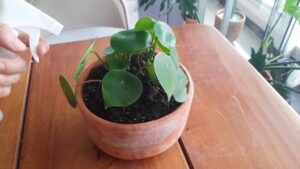
Raindrop Peperomia does not require frequent repotting. Due to the shallow root systems, Peperomia Raindrop growth is rather slow, which means less frequent transplanting is needed.
Transplantation is required at intervals of 2-3 years when the Peperomia Polybotrya grows out of the pot, and the root system does not fit in it. If the pot is too small, growth may be stunted.
You need to transplant bushes in containers that are slightly larger than the previous option. They must also be equipped with a drainage hole to prevent waterlogging and root rot.
Optimal Humidity Levels for Peperomia Raindrop Care
Raindrop Peperomia prefers conditions that are as close to a tropical environment as possible. Therefore, the air in the room must be constantly humid for healthy leaf development. To create an imitation of the jungle at home, place a humidifier near the bushes. It is easy to care for, and it provides moisture to several plants at once.
It is better to choose devices that can work autonomously for several days.
Remember that they need to constantly change the water to prevent bacterial growth and maintain plant health.
Ideal Temperature Range for Peperomia Polybotrya
Raindrop Peperomia prefers to grow in conditions where the air temperature is between 65 °F and 80 ℉. That is, room temperature is enough, making this an easy houseplant to maintain indoors year-round.
Best Fertilizer for Peperomia Raindrop Growth
Raindrop Peperomia needs fertilizer for optimal growth and vibrant foliage. However, it is better to dilute them only half of the dosage prescribed on the package to avoid fertilizer burn.
They need to be applied in spring and summer when the growing season occurs. Fertilizers should be applied in small quantities to support healthy development without overfeeding.
Peperomia Raindrop Size and Growth Rate Expectations
Frequently, you can hear the question, how big does a Peperomia Raindrop get? Almost all types of Peperomia Raindrops have a slow growth rate, making them perfect for small spaces. Height, under favorable conditions, is within 12 inches.
How to Propagate Peperomia Raindrop: Three Proven Methods
Several propagation options can be applied to Raindrop Peperomia. These methods allow you to create new plants from your existing Peperomia Polybotrya. More about them, you can read below.
Propagating Peperomia Raindrop Using Stem Cuttings
This breeding option is in great demand because it is simple and has high success rates. First, you need to determine the stem, on which there are several healthy coin leaf Raindrop Peperomia. After, you need to find the place where the node is located. It should be around the place where the incision is made.
A node is a place where leaves and roots depart from a stem. In this place, new roots grow after the incision for successful propagation. It is better to make an incision slightly below the knot.
That is, you have to cut