
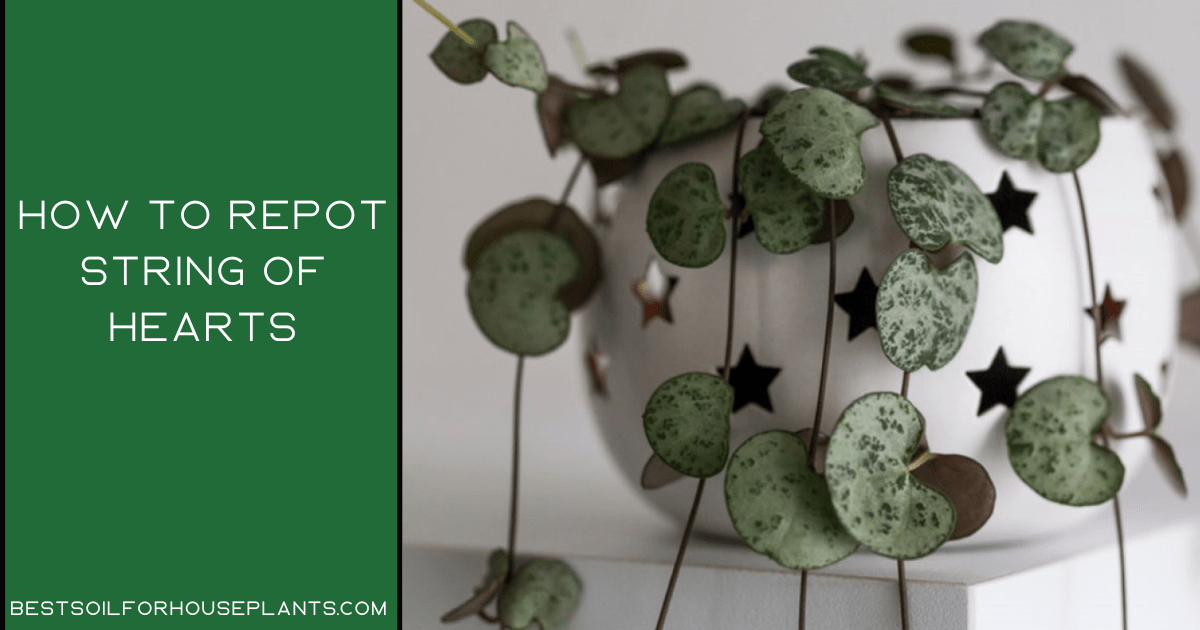
The plant ceropegia, commonly known as string of hearts, is a representative of the Lastovnev (or Kutrov) family native to Asian and African tropics. This comprehensive guide will teach you exactly how to repot string of hearts successfully.
This genus includes over 180 different species of semi-succulent plants with long, trailing shoots. The name ceropegia comes from the word “candlestick” and is associated with the unusual appearance of its flowers, reminiscent of a fancy lantern.
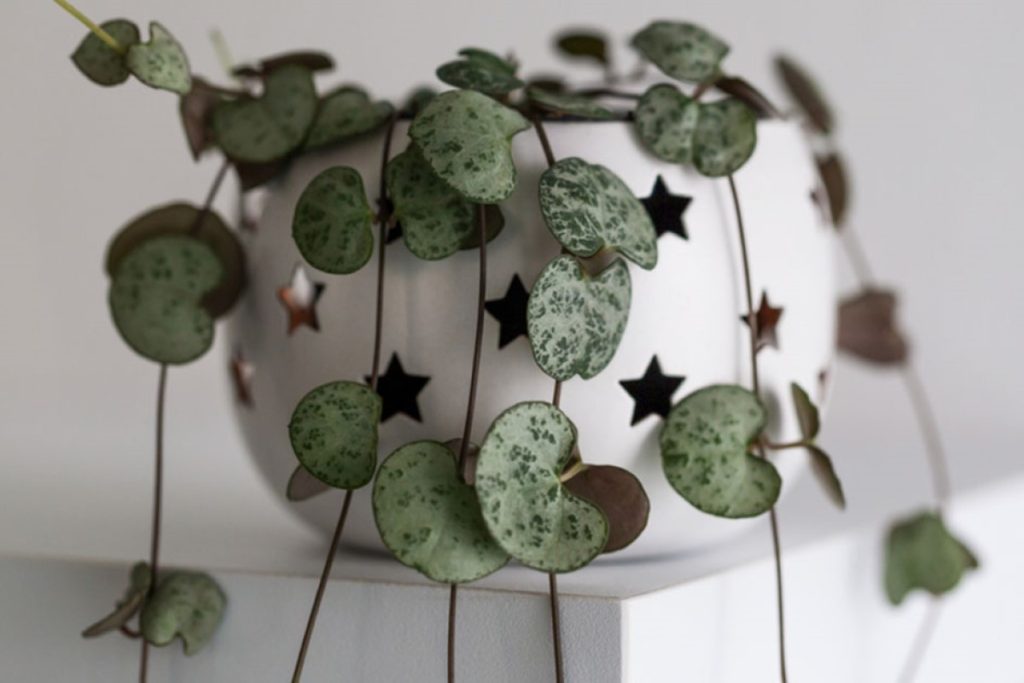
Often, ceropegia is used as an ampelous hanging plant. Thanks to this versatility, the flower fits into any environment with equal success, from homes to offices.
This quality makes string of hearts perfect for giving liveliness to minimalist office interiors. Ceropegia plays an important role in the composition of all kinds of indoor plant displays.
Why String of Hearts is So Popular: Understanding This Succulent Houseplant
Ceropegia is a tropical perennial with fleshy stems that are creeping, climbing, or erect. On them are medium-sized thickened leaves that store moisture.
Most ceropegia have the properties of succulents, and their foliage and stems contain a clear sap that is considered poisonous. Ceropegia rhizomes resemble tubers or have the shape of a spindle where plants also store moisture.
Axillary flowers with a tubular corolla, expanding at the base, are located singly or form umbrella inflorescences or brushes. The petals of each flower grow together from above, giving it a very original shape.
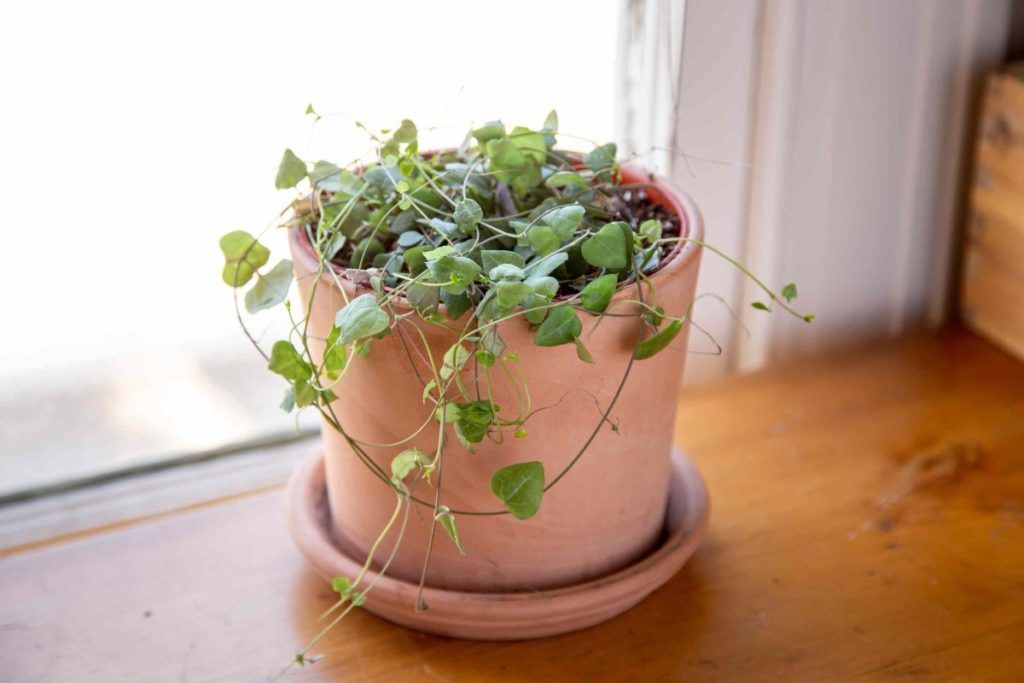
Such a structure contributes to the pollination of flowers through a unique trap mechanism. Climbing into such a “candlestick,” the pollinator fly searches for a way out while simultaneously collecting pollen.
After some time, the hairs closing the exits weaken, releasing the fly to freedom. After flowering, fruit leaflets of an elongated shape are tied to the shoots, and seeds can be used for propagation.
String of Hearts Care Guide: Essential Growing Requirements
The information below shows comprehensive care instructions for growing ceropegia string of hearts at home successfully.
Light Requirements for String of Hearts Plants
The string of hearts needs bright indirect light, but during summer months, the bushes should avoid direct sunlight. The easiest way is to keep pots with these trailing plants on west or east-facing windows.
South-facing windows in summer require light shading in the afternoon to prevent leaf burn. Proper lighting is essential for healthy growth.
Lack of illumination negatively affects the decorativeness of string of hearts bushes, causing smaller foliage and preventing flowering. Excess light often leads to burns, but if necessary, the plant can be supplemented with grow lamps.
Ideal Temperature for String of Hearts
During active growth, the string of hearts thrives in warm temperatures of about 20-25 degrees Celsius. From autumn, gradually reduce the temperature.
In winter months, maintain temperatures around 14-16 degrees Celsius. The lower threshold is 11 degrees Celsius for this tropical plant.
Prolonged exposure to cold temperatures can end with the death of this heat-loving succulent. The dormant period is expressed in slowing down the growth process.
If Ceropegia is not allowed to rest in coolness, its shoots will stretch and weaken significantly. Some climbing forms can tolerate warm wintering with sufficient light, and daily temperature fluctuations are generally well-tolerated.
How Often to Water String of Hearts Plants
From spring to autumn, the string of hearts needs thorough but infrequent watering. In winter, when the ceropegia is cool, reduce watering frequency, waiting a couple of days after the soil begins to dry out. Proper watering prevents root rot.
Humidity Requirements for String of Hearts
The string of hearts develops well at any humidity level. This low-maintenance plant does not need spraying as air humidity does not play a special role.
You can periodically wash or wipe the leaves of string of hearts for hygienic purposes, removing dust from them for optimal photosynthesis.
Best Soil Mix for String of Hearts
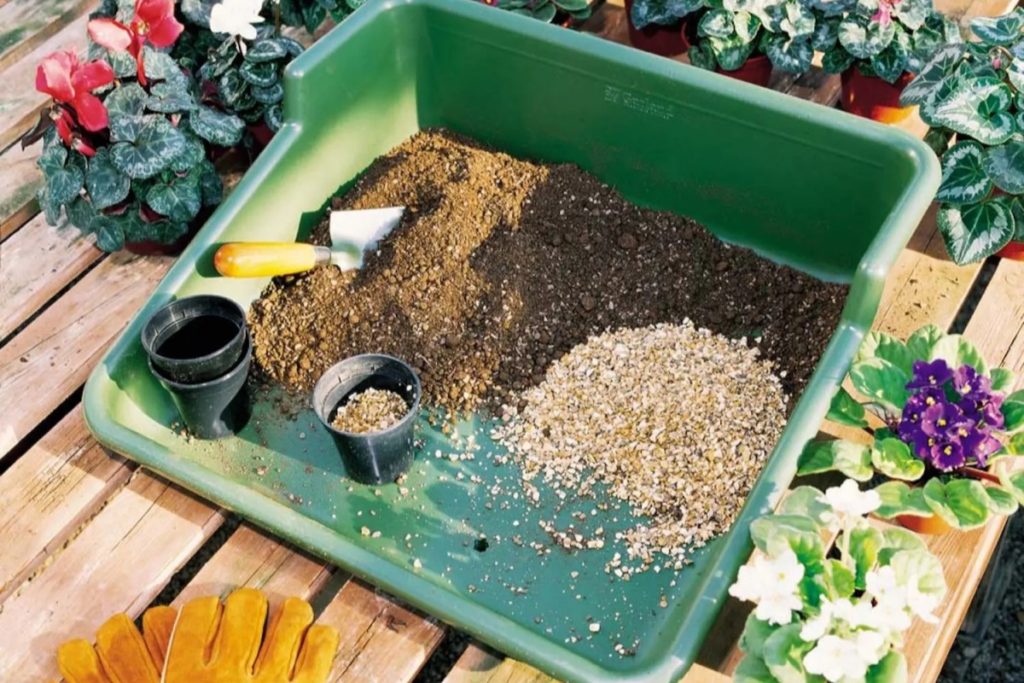
For cultivation, you can use regular well-draining potting soil mix for cacti or succulent plants. If preparing potting soil independently, mix sand with humus, turf, and leafy soil in equal parts. Adding a pinch of charcoal to any planting mixture is recommended for drainage.
Fertilizing String of Hearts Plants
Apply nutrient elements approximately 1-2 times per month from March to the end of summer for optimal growth. You can use mineral formulations for succulents or cacti, reducing the recommended dosage by half to avoid fertilizer burn.
String of Hearts Flowering Guide
With proper care and observance of all growing conditions, string of hearts can bloom almost year-round. However, the flowers are rather plain and not particularly decorative.
Many growers keep this hanging plant at home because of its beautiful heart-shaped leaves rather than flowers. If there is no need for flowers, they can simply be removed to conserve plant energy.
String of Hearts Dormant Period
Winter dormancy occurs but is weakly manifested in string of hearts. Additional seasonal care information is provided below.
Pruning and Shaping String of Hearts Plants
Ceropegia is shaped by pinching growing tips. Maintain decorative appearance by pruning weak, thinned, and old shoots regularly.
Ceropegia blooms almost year-round with proper care and sufficient light intensity. However, the flowering does not represent a special decorative effect, so many growers focus on foliage.
Usually every 5 years, refresh this vine by rooting new cuttings. Do this when the plant has grown strongly and lost its attractive appearance due to leggy growth.
How to Repot String of Hearts: Complete Step-by-Step Guide
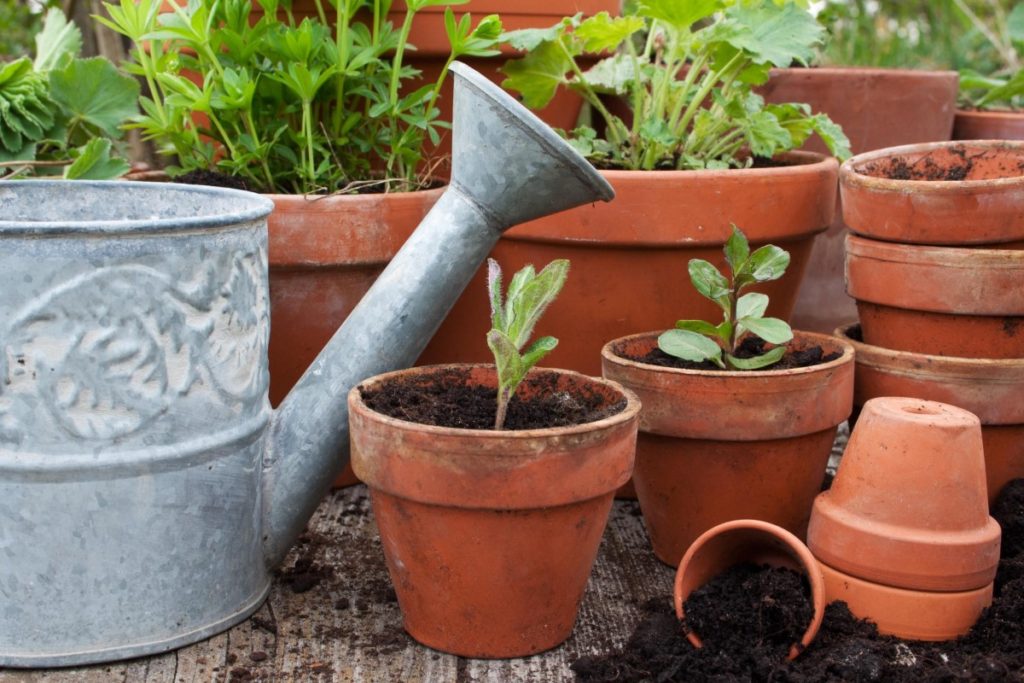
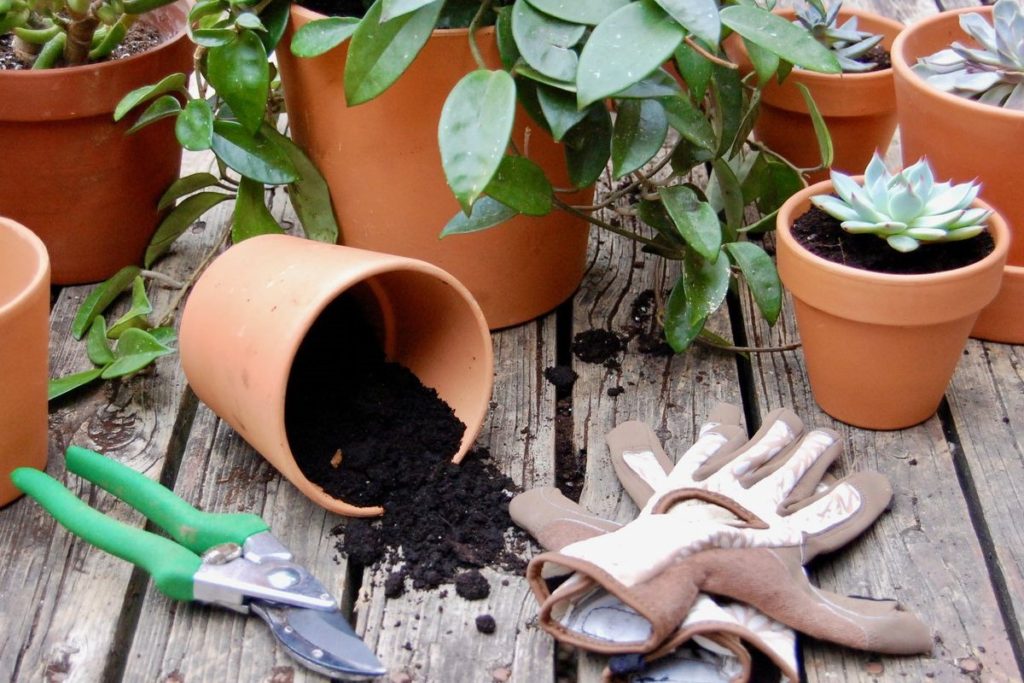
Young string of hearts plants need transplanting every spring into new containers. Adult plants require repotting less frequently, only when root-bound.
Only young hanging plants need regular transplants for healthy growth. When should your string of hearts be repotted? Transplant every spring during active growth, changing to a more spacious pot.
Mature string of hearts only needs repotting when they outgrow their current container. Transfer to a new pot using the transplanting method along with the soil clod.
The old potting soil from the roots can be lightly shaken off during repotting. Ceropegia grows best in low, wide pots that accommodate spreading roots.
Drainage holes must be present at the bottom of containers to prevent waterlogging. This will help avoid root rot issues.
Well-draining potting mix and drainage material can reach up to one-quarter of the pot volume. Transfer the bush to a new pot and fill all voids with fresh potting soil.
The rosary vine does not need extensive pruning of stems during repotting, as formation will not make its bushes much more magnificent or fuller.
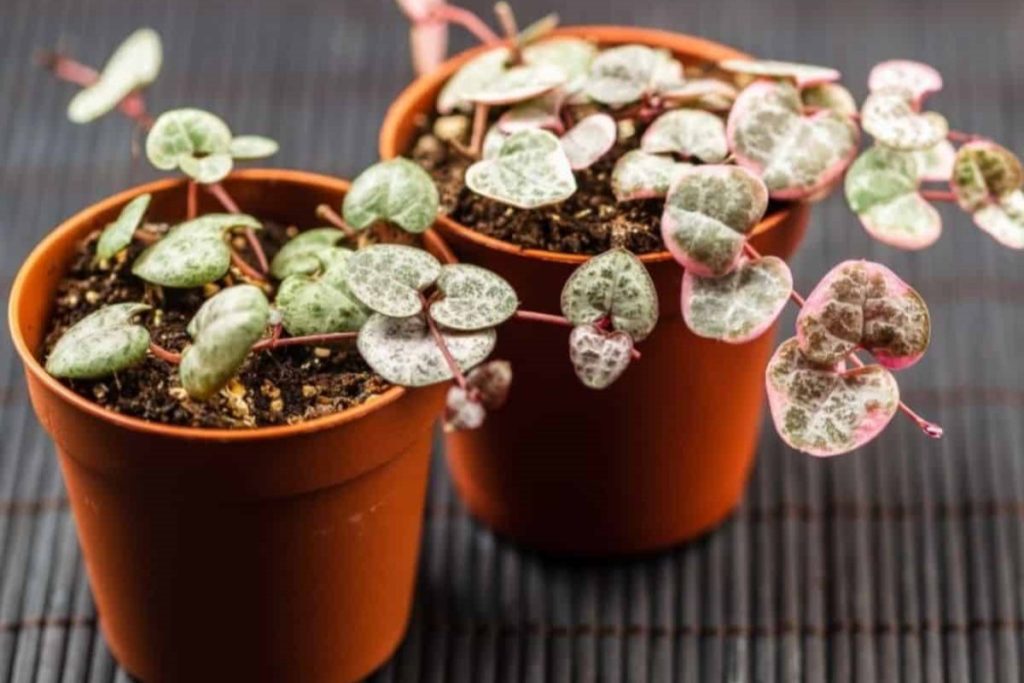
Long shoots can hang freely when using string of hearts as an ampelous plant, or fix them on decorative supports installed during transplantation. Due to stem fragility, handle with care during repotting.
Only remove stems that are too long or damaged from the bush. Sanitary pruning is best carried out in spring or as needed throughout the growing season.
Once every few years, as decorative effect diminishes and stems become bare, renew ceropegia by replacing with plants obtained from cuttings.
String of Hearts Propagation Methods: Complete Guide
Ceropegia can be propagated by seeds, stem cuttings, root division, and aerial tubers that form in some species.
Growing String of Hearts from Seeds
If you collect seeds from ceropegia, wash them in advance in hot water (about 55 degrees Celsius) and keep in potassium permanganate solution for two hours.
For sowing, prepare a container with well-draining