

Money trees (Pachira aquatica) are popular houseplants due to their unique braided trunks and lush foliage. These tropical plants can live for several years with proper care and attention. Many money tree owners encounter issues with their plants dying, often struggling to identify the underlying causes of decline.
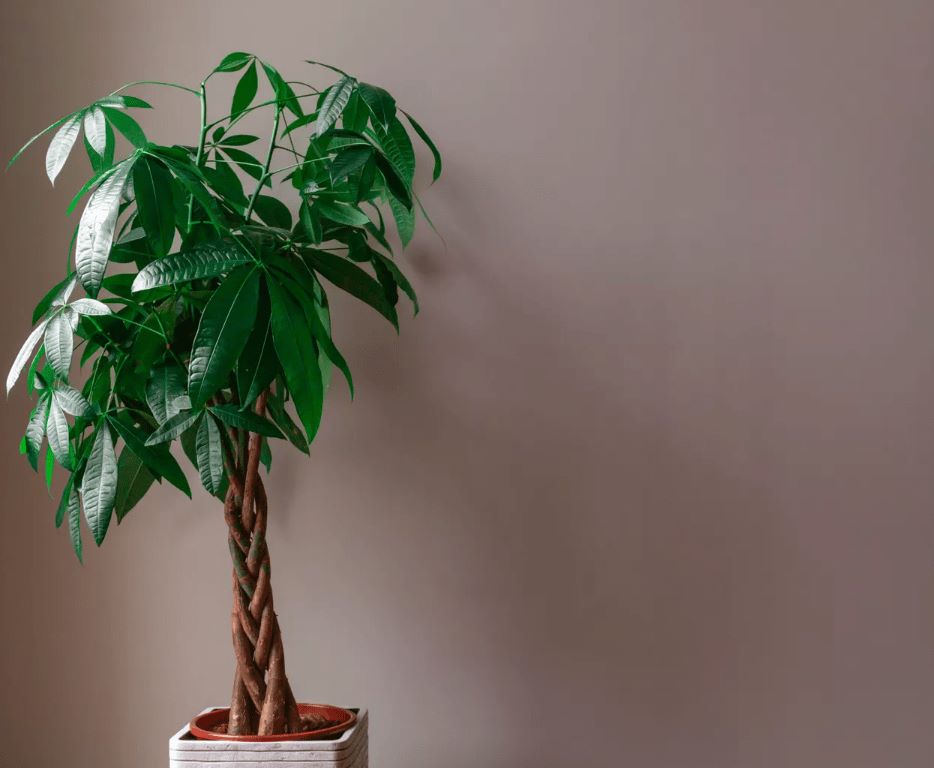
If your money tree’s leaves are turning yellow or brown and dropping off, the growing conditions are likely not ideal. To revive a dying money tree, recreate a humid environment, maintain consistently moist soil, and protect the plant from direct sunlight. Money trees tolerate typical household temperatures, thriving best between 53.6°F and 77°F (12°C and 25°C).
Common Reasons Why Your Money Tree is Dying
Money tree plants are favored for indoor decoration and gifting due to their low maintenance requirements and distinctive braided design. Despite their resilience, money trees can become unhealthy without proper care. Common symptoms of a dying money tree include yellowing leaves, brown spots on foliage, wilting branches, and sparse leaf growth.
Understanding Money Tree Dormancy During Winter Months
When days become cooler and shorter, money trees may enter dormancy to conserve energy. During this natural rest period, growth stops and leaves may yellow or drop. A money tree can remain dormant for several months throughout winter, which is completely normal.
Reduce fertilizer application during winter months to match the plant’s reduced nutrient needs. Avoid chemical-based products and choose organic fertilizer instead. Apply a balanced fertilizer with equal parts nitrogen, phosphorus, and potassium once monthly from November through March to support your dormant money tree.
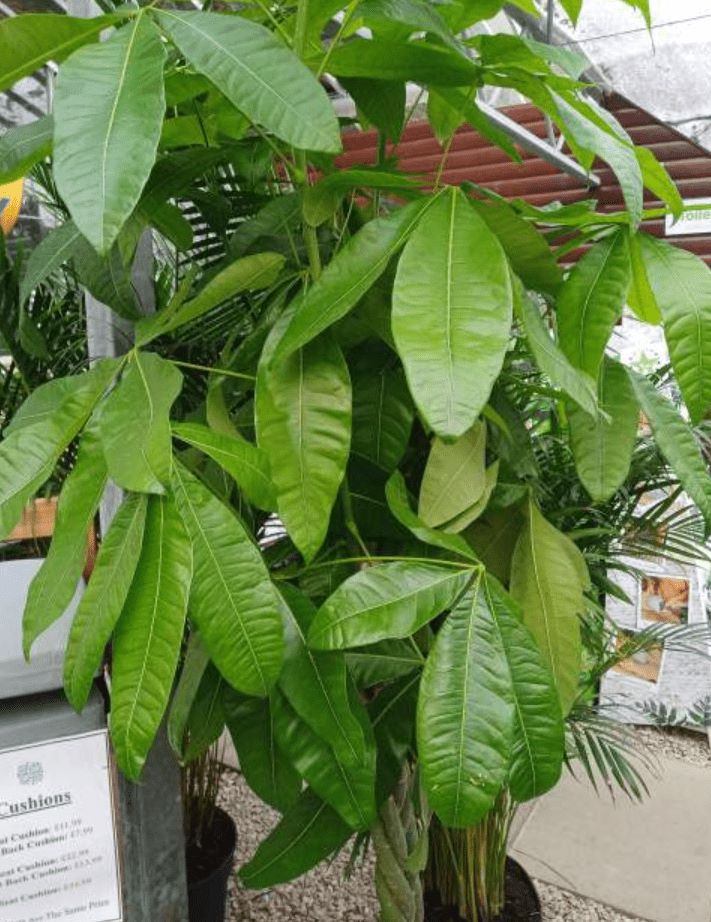
Beyond fertilizing, ensure your money tree receives adequate moisture throughout dormancy. Keep soil moist but never soggy by checking weekly—insert your finger into the soil to test for dampness. Water when necessary and always use pots with drainage holes to prevent waterlogging.
Preventing Transplant Shock in Newly Purchased Money Trees
When acquiring new money tree plants, understanding transplant shock is essential. Money trees become accustomed to their environment and can experience shock when conditions suddenly change. Relocation or transplanting commonly triggers this survival response in money tree plants.
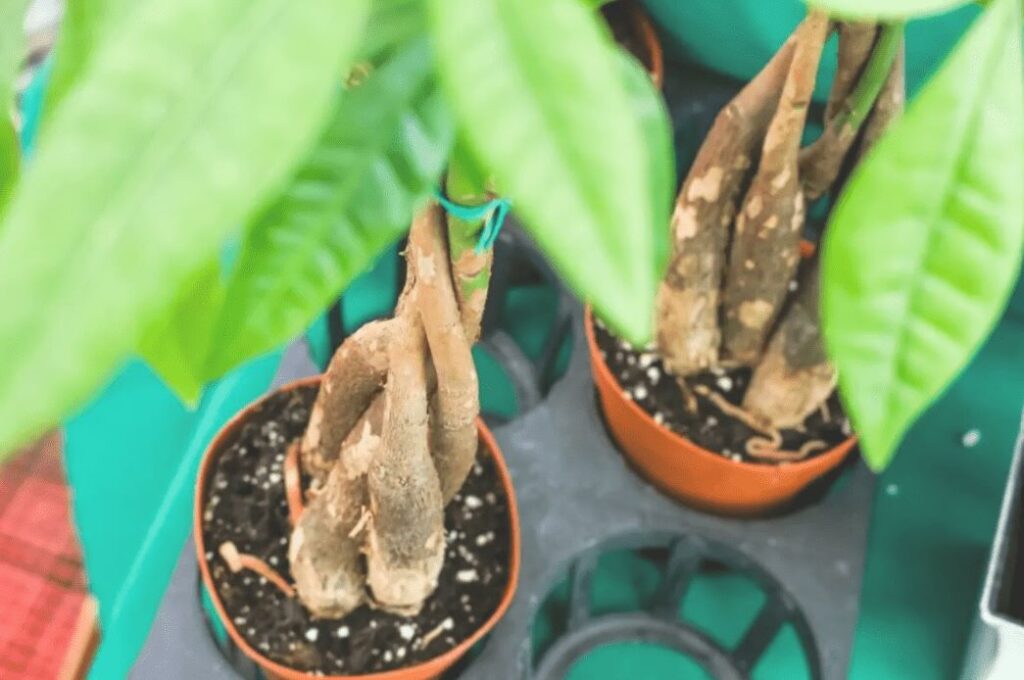
The plant experiences major changes in environment, light exposure, and watering patterns during relocation.
Help your money tree recover from transplant shock by providing indirect sunlight for 4 to 6 hours daily. This ensures leaves receive adequate light without overwhelming stress from direct sun rays.
Fertilize your money tree once monthly during the active growing season. This feeding schedule provides essential nutrients without overwhelming the plant’s root system.
Mastering Proper Watering Techniques for Money Trees
Money trees require precise watering to maintain health and appearance. Check soil weekly—if dry one inch below the surface, it’s time to water. Establishing a consistent watering routine prevents both overwatering and underwatering problems in money tree plants.
Overwatering Money Trees: Signs and Prevention
Money trees (Pachira aquatica) are attractive houseplants particularly susceptible to overwatering damage. Excessive moisture causes root rot when roots remain submerged too long and cannot process water efficiently. This oxygen deprivation prevents proper nutrient uptake.
Root rot symptoms include yellowing and wilting leaves, foul-smelling soil, and mushy, dark roots.
Prevent overwatering by using well-draining potting soil and watering only when the top two inches feel dry to touch.
Ensure adequate drainage holes exist in your planter to prevent water pooling at the bottom. Proper drainage allows excess water to escape quickly and freely.
If you suspect root rot, act immediately. Remove the money tree from its pot and carefully trim affected roots with sterilized pruning shears.
Overwatering causes root rot by submerging roots too long, preventing oxygen and nutrient access. Symptoms include yellowing, wilting leaves, and foul odors from decomposing roots.
Underwatering Money Trees: Recognizing Dehydration
Underwatering damages money trees as severely as overwatering. Money trees need consistent water and humidity for thriving growth, and their roots require adequate moisture to remain healthy. Underwatering causes wilting leaves, yellowing foliage, and soil pulling away from pot edges. If you notice these signs, water your money tree immediately to prevent permanent damage and shortened lifespan.
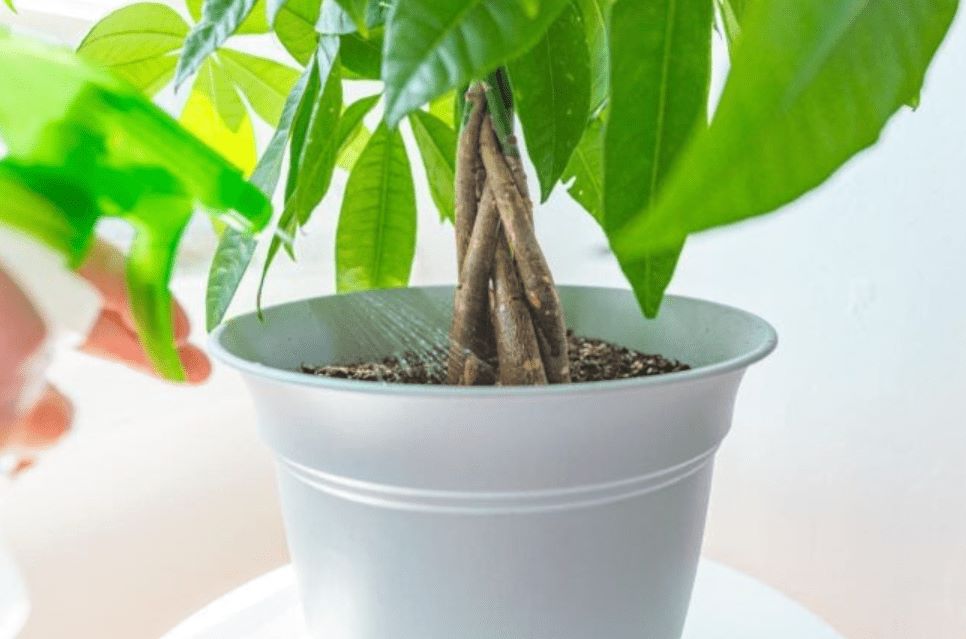
Water your money tree when the top 1-2 inches of soil feel dry. Money trees require more frequent watering during warmer months, so check soil moisture regularly during spring and summer. Misting your plant with light water spray provides additional humidity for optimal money tree health.
Diagnosing Common Money Tree Health Problems
When caring for money trees, recognize key symptoms indicating poor health. Watch for yellowing or drooping leaves, brown spots on leaves or stems, and stunted growth patterns in your money tree plant.
Why is My Money Tree Drooping? Causes and Solutions
The Problem:
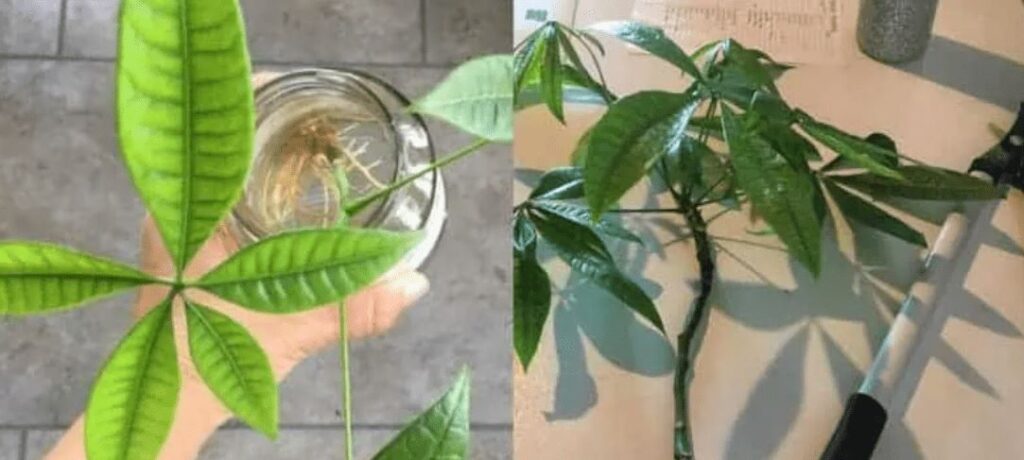
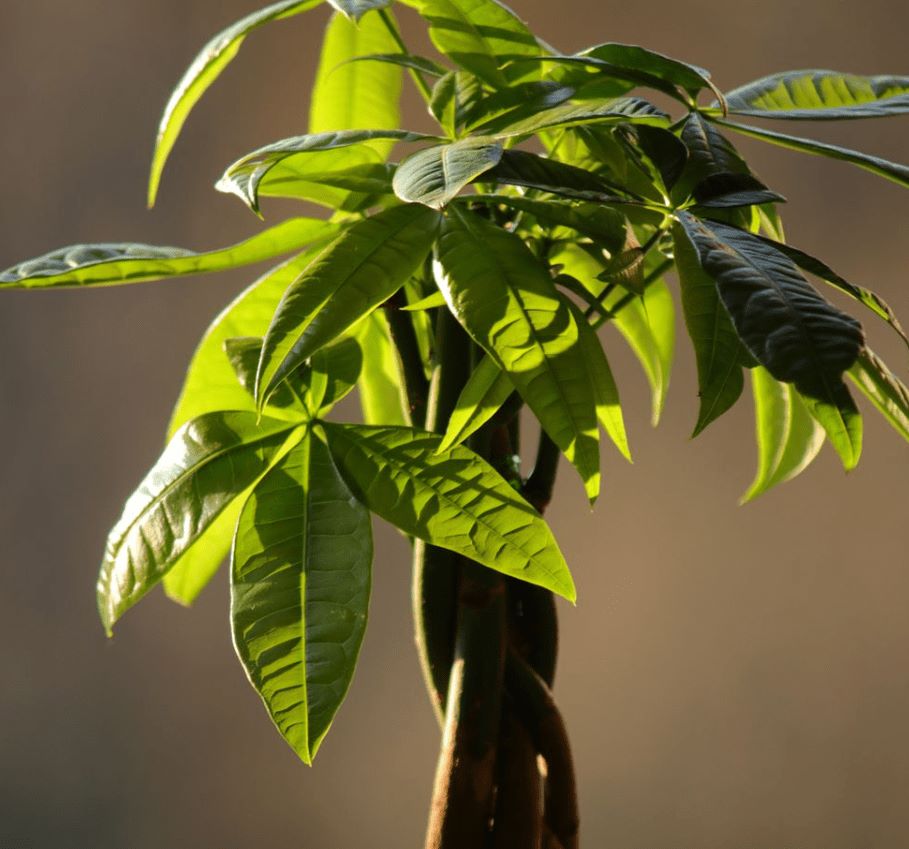
Money trees (Pachira aquatica) are popular choices for indoor and outdoor décor thanks to glossy, dark green leaves and unique braided trunks. Unfortunately, these attractive leaves can droop, leaving owners wondering why their money tree isn’t looking its best.
Why Is It Happening?:
OVERWATERING: Excessive watering damages money tree roots, causing disastrous results. Waterlogged roots cannot transport water and nutrients properly, leading to drooping or yellowing leaves throughout the plant.
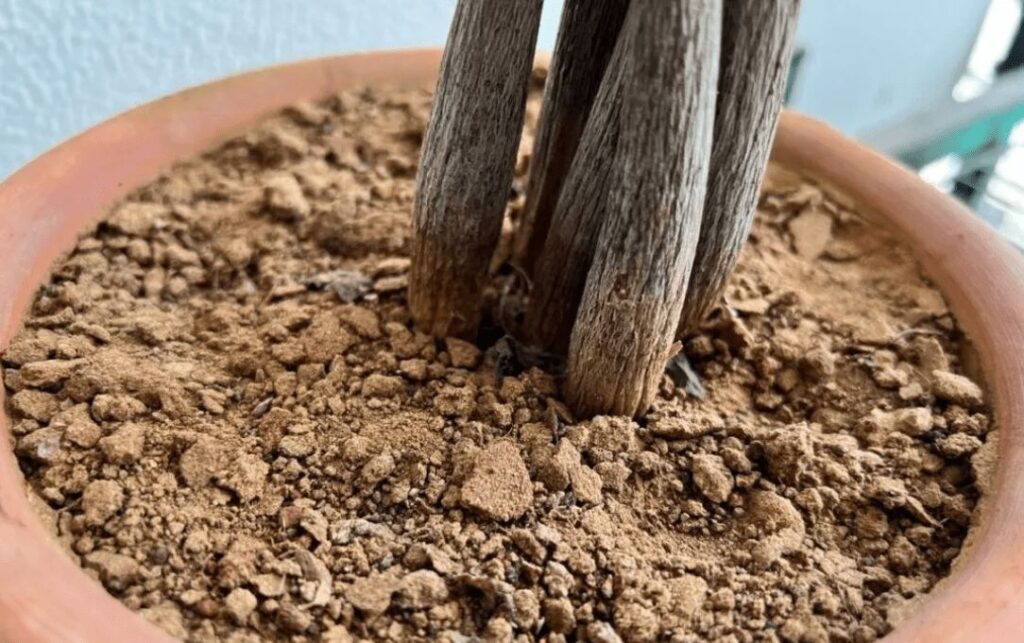
UNDERWATERING: Underwatering is a common money tree problem. If your money tree droops, insufficient water may be the cause. Examine soil closely—bone dry soil with curled or wrinkled leaves alongside drooping indicates underwatering issues.
The Solution:
OVERWATERING: Overwatering causes significant money tree damage if not addressed promptly. Ensure your money tree receives appropriate daily water amounts and that its container provides proper drainage capabilities.
If you suspect overwatering, first verify proper container drainage. Pots without drainage holes or with plugged holes cause overly wet soil. Unplug drainage holes or replant the money tree into a new container with adequate drainage.
After selecting a properly draining container, avoid overwatering by checking soil daily. Water only when the top 1-2 inches become dry. Use a saucer beneath your plant so excess water drains away quickly and easily.
UNDERWATERING: Underwatering has serious consequences for money tree health, making regular watering essential. Money trees typically require water every 7-10 days to stay healthy and vibrant, though exact amounts vary by pot size and environmental conditions.
When unsure, water your money tree more frequently rather than less to prevent dehydration stress.
Drooping or wilted money trees signal the need for more regular watering. Use room-temperature water and ensure soil is evenly saturated throughout. Allow water to drain from the pot bottom, then discard excess. Remove standing water beneath the planter and check for overwatering signs like root rot, yellowed leaves, or excessive drooping.
Why Are My Money Tree Leaves Wrinkled and Curling?
If your money tree’s leaves wrinkle or curl, or soil pulls back from pot sides, your plant is likely experiencing dehydration stress.
The Problem:
Wrinkling and curling money tree leaves usually indicate dehydration. Watering lapses cause moisture deficiency, triggering leaf wrinkling or curling. Overwatering also causes leaf wrinkling as waterlogged soil prevents adequate oxygen circulation to roots.
Why Is It Happening?:
UNDERWATERING: Underwatering commonly affects money tree plants, manifesting as wrinkled, wavy, or curled leaves. This early dehydration sign can often be reversed by improving watering techniques promptly before permanent leaf damage occurs.
The Solution:
UNDERWATERING: Underwatering commonly affects money trees and other houseplants. Symptoms appear before problem identification is possible. Money tree leaves become curled and wrinkled, signaling excessively dry soil. Check soil moisture and water thoroughly to resolve this issue.