

Unlock the full potential of your tropical climbing houseplants by treating them to their own personal vertical jungle. Moss poles provide a great way for those with limited space (or no trees in sight!) to give houseplants such as Monstera the support and stimulation they crave, all while adding vibrancy and life into any living area. How to use a moss pole for indoor plants we will consider in our comprehensive guide.
In this article we’ll take you through everything from choosing moss pole materials, accessories needed for mounting them safely so that even unruly growers can flourish – including our very own hands-on demonstration on how it’s done! Let’s jump right in and create an adventure paradise indoors today!
What is a Moss Pole for Houseplants?
Moss poles have undergone an evolution in the horticultural space, now often utilizing different fibrous materials than just moss. This updated version of a classic plant support allows for more flexibility when growing climbing plants like Aroids or epiphytic species – giving them support to reach their fullest potential.
Taking care of climbing houseplants is more than just providing basic needs like water and sunlight – it’s about giving them the vertical environment they need to reach their potential. It takes a little tender loving support to grow that green thumb.
Benefits of Using Moss Poles for Indoor Plants
- They provide support for epiphytic plants to grow upwards. Vining species of plants maximize their potential for growth by utilizing aerial roots to firmly attach themselves to fibrous material, forming a secure anchor from which they can expand.
- They can supply moisture to the plant.Moss poles are always made with a water retentive material, so watering or spraying the pole will allow it to store some moisture for the plants’ aerial roots to access.
- They often help plants progress through to maturity. Taller climbing plants think they’re closer to the sunlight at the top of the rainforest canopy and make changes to capitalize on that. Potentially leading to larger plants, larger leaves, fenestrations and more.
- They’re a space-efficient solution. I get it, we’re all low on counter space for new plants, but climbing plants can be trained to occupy vertical space instead of horizontal.
- They can make unruly plants look really good. We’ve all got that one vining species that looks like all stem and no foliage sometimes. By integrating the stem of the plant with the central moss pole, it visually removes the stem and highlights the foliage.
- You can increase the shape of the plant to increase the density of the foliage. By wrapping the plant around a moss pole, you’re able to effectively bring leaves closer together – shaping the plants’ foliage as you see fit.
How to Use a Moss Pole for Climbing Houseplants
Getting Started with Your Moss Pole
Starting your moss pole training early sets you up for success, just like in education! For optimal placement of the base, ensure it is firmly rooted into the substrate and close to the plant’s base. With a little patience and persistence, guidance can be provided that will help develop strong vines with beautiful foliage growth along your specific shape or pattern.
Don’t feel overwhelmed if you have a large mature plant that needs some extra support – with the right moss pole, it’s never too late to get your green friend growing strong. Even small and juvenile plants can benefit from using one of these helpful aids, as they’ll become accustomed to relying on its support early in life!
Coming home with a new plant is just what nature intended, and repotting it can be even more thrilling when you get to add that perfect moss pole. But take note: jamming the pole into an overgrown mass of roots won’t cut it – careful manipulation is essential for successful transplanting!
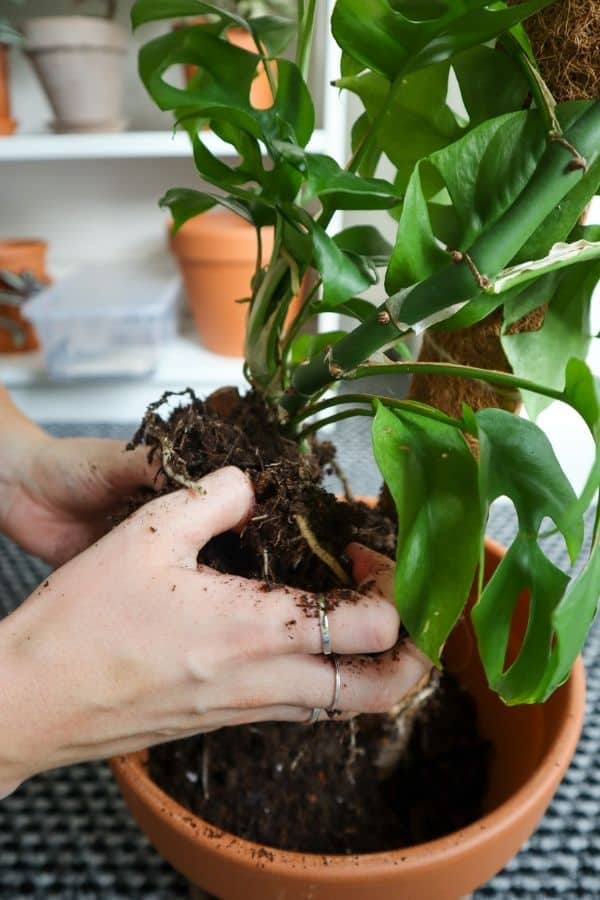
Your moss pole needs some TLC before planting. Make sure to soak it in water beforehand, and separate the roots gently when removing your plant so they fit flush with its base. Plant them together for a chance at happy-ever-after with your climbing houseplants!
How to Attach Plants to a Moss Pole
Planting season can be utterly delightful with vines wrapping around moss poles, offering a colorful and almost magical touch to our indoor gardens. For more rambunctious plants like Monstera or Philodendron, it’s best to secure larger stems for the strongest hold possible.
By attaching climbing plants to a moss pole, they can be securely supported and the smaller stems will have ample opportunity to show off their vibrant foliage.
#1. Pin them using metal staples. I’ve seen these sold under the name of “moss pole pins” but they’re essentially just a U shape that you can press into the pole, trapping the stem in the middle.
#2. Wrap them with twine or wire. Tying a loop around the outside of the stem and pole together and then tightening it to bind them together. Twine is my preferred method – I like the rustic look.
#3. Velcro straps or cable ties. Same deal as the twine really. It doesn’t look as natural, but when you’re dealing with big and heavy climbing plants, the added security can help.
#4. Wrap the plant itself. Some plants need minimal intervention in attaching to the moss pole. I’ve successfully attached plants just by wrapping the vine gently around the pole, making sure the aerial roots had something to grip.
For a successful plant growth, ensure that the moss pole is placed in such a way where it will be easy for aerial roots to develop. Connecting at the nodes of your climbing plants makes this process easier and provides an ideal environment for flourishing foliage.
How to Train Climbing Plants on Moss Poles
Once your majestic climbing plant has taken root, you can help it reach for the sky by providing plenty of mist and creating a steamy, humid atmosphere. With regular guidance up its moss pole along the way, you’ll be rewarded with an eye-catching display that’s sure to draw attention!
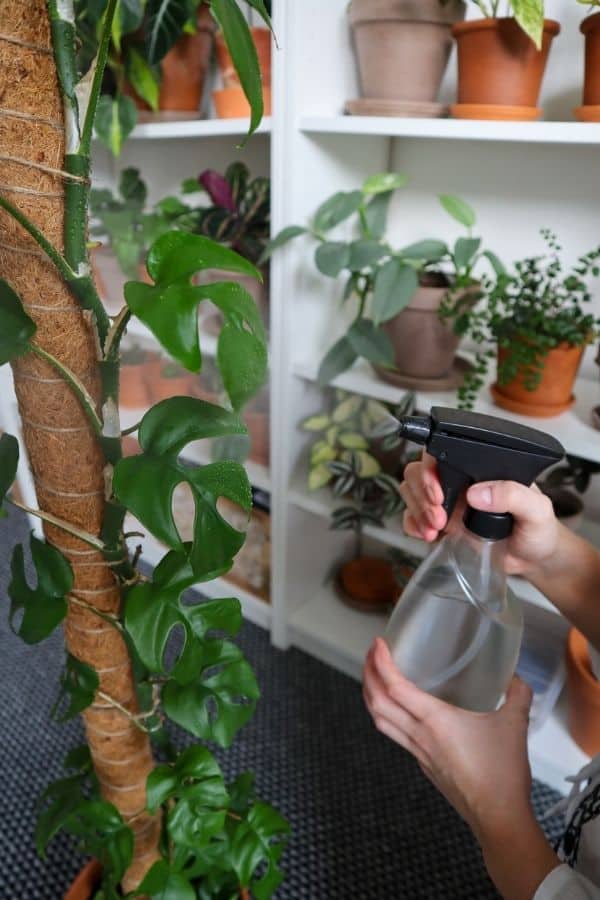
Once your climbing plant is established and stable, it can take the reigns of its own growth! As a sign of victory in nurturing this little one to health, you’ll be able to freely remove all support that was used during its formative stages.
What to Do When Plants Reach the Top of the Moss Pole?
Want to give your moss pole an extra boost? Try extending it! To make a taller and stronger tower, just cut the tip of what you already have and slot in another piece with a slightly thinner diameter. With enough length at its base, this should firmly hold everything together – creating one towering masterpiece that adds more height to your indoor jungle.
You can encourage your climbing plant to grow bigger and better by simply pruning away its top–the process is cyclical, so each time you do it the leaves will come back even stronger.
Types of Moss Poles for Houseplants
Sphagnum Moss Pole for Tropical Plants
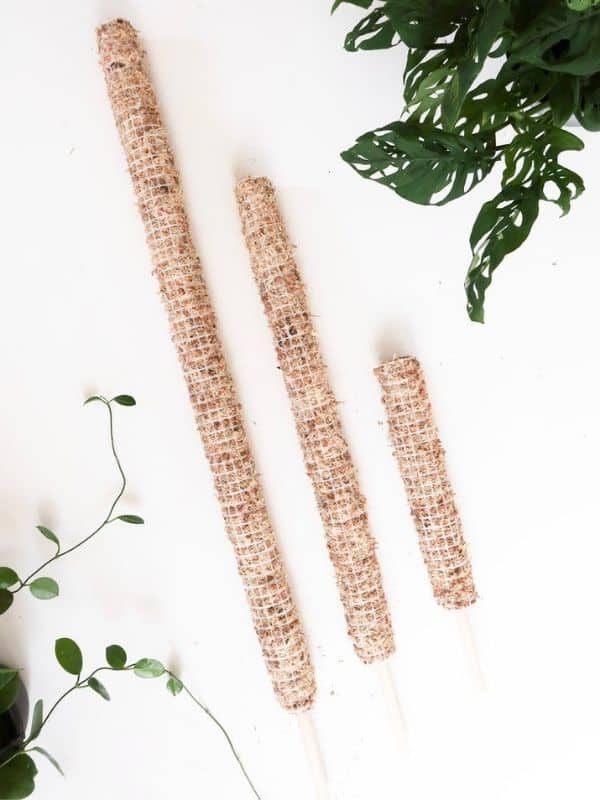
Give your tropical houseplants a natural boost with the classic sphagnum moss pole! These poles are bound together using twine or wire and stuffed full of sphagnum moss – nature’s own supportive material. Its water retention properties, outstanding resistance to rot and its light texture make it perfect for plant roots to cling onto. Or why not go all out with live sphagnum moss – bring the freshness of life into your garden space.
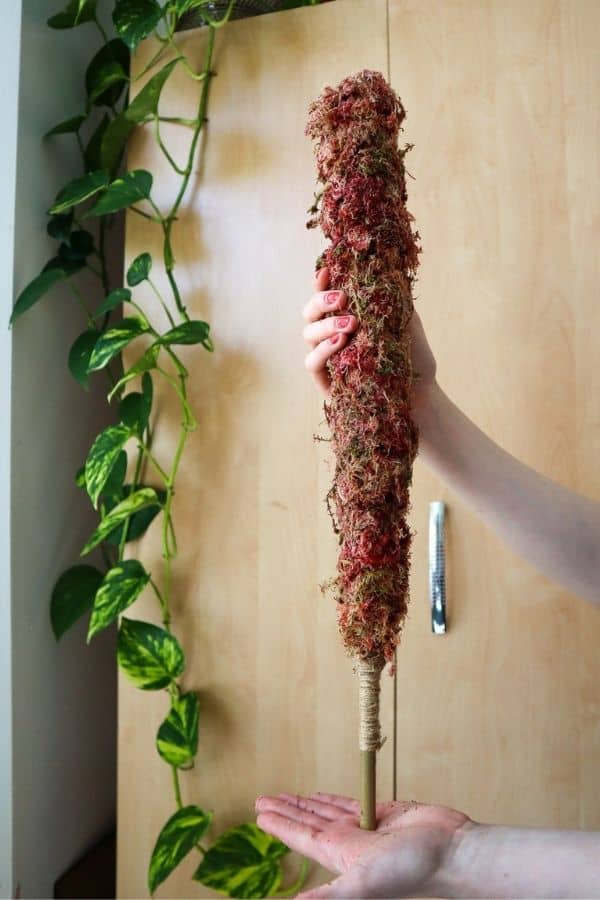
My live moss pole had the potential to look vivid and dynamic, but proved difficult for me to keep in that state. Despite my best efforts of misting it regularly and storing it at a humidly-rich environment, I found myself having to revive its luster time after time.
Despite their water retention capabilities, I still find it’s a challenge to keep a sphagnum moss pole moist consistently for optimal plant growth.
Coco Coir Pole for Climbing Aroids
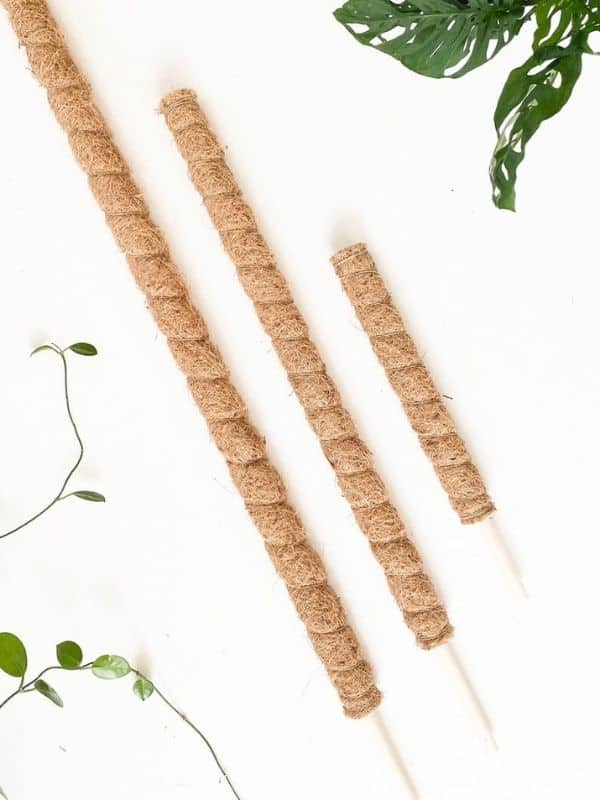
Coco coir is an incredibly versatile natural material derived from the husks of coconuts, possessing many of the same qualities as dried sphagnum moss. It has natural water-retention capabilities and also holds up well against regular breakdown over time, making it an ideal choice for natural environment gardens as well as indoor plants.
Coco coir is especially conducive to helping vining plants grow while still ensuring they are hydrated at all times. Plant lovers can rest assured that with regular plant upkeep and a bit of natural fiber in the mix, their green friends will be around for weeks, months and even years to come.
Coco coir is the natural solution for planting enthusiasts looking to support their vining houseplants in the indoor environment. Unlike other materials, coco coir is easily accessible and readily available for an affordable price. Moreover, it’s quickly becoming the material of choice for moss poles due to its natural structure and compositional properties, as well as its sustainability over time compared to sphagnum moss.
It can support your climbing plant as it grows and can be reused easily if plantings need to be changed regularly. Coco coir could be exactly what you need if you’re looking for natural support when watching your plants grow.
Best for Aroids.
- Epipremnum – e.g. Cebu Blue Pothos
- Philodendron – e.g. Philodendron micans
- Monstera – e.g. Monstera siltepecana
Tree Fern Fiber Pole for Delicate Climbing Plants
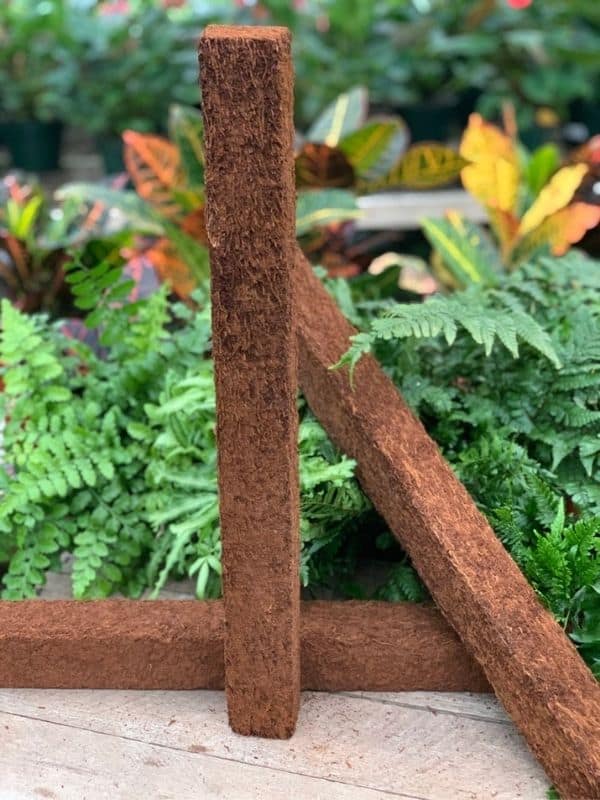
Tree fern fiber isn’t quite a pole per se, but more of a natural totem for the indoor plant environment. It’s perfect for vining plants like epiphytes, allowing them to grow and stretch up as if they had access to natural supports. Tree fern fiber provides both the structure and nutrition needed for climbing plants to grow their tendrils where they normally wouldn’t have the space or material to do so.
Although this natural totem is not typically seen as a traditional moss pole, it can be used interchangeably so plant owners can watch their climbing plants grow regularly in natural conditions.
Natural environments are full of plants that have adapted to their own unique growing conditions. As an example, vining plants like climbing Philodendrons often use natural material like sphagnum or coir in the form of a tightly packed cord as a secure base for their aerial roots to attach to.
However, when natural material comes more in the form of a condensed block of fibers it can still provide room for climbing plants to grow and spread their wings as long as they can find some natural ‘grips’ or footholds. Such material is not suitable for huge plants that need to be firmly attached but turns out perfect when used regularly to support delicate vining plants.
Although there may be some sustainability issues to consider, you can rest assured that buying Fernwood’s New Zealand tree fern fiber will help preserve the environment.
Best for delicate climbing and trailing plants.
- Ficus – e.g. Ficus pumila
- Peperomia – e.g. Peperomia prostrata
- Dischidia – e.g. Dischidia ovata
Making a DIY Moss Pole for Houseplants
Looking for a fun, cost-effective way to get your hands on plenty of moss poles for your climbing houseplants? Gather the necessary materials and enjoy some crafty DIY projects while making them! It pays off more in the long run if you buy supplies in bulk.
You’ll need:
- A central pole – PVC pipes are commonly used but you can also use a wooden stake.
- A fibrous material – You can either bind loose pieces of moss or if you’re using coir you can also find it in sheets that you can simply wrap around the pole.
- A binding material – You can use fishing wire, a wire mesh wrap, and twine. Anything that’s not going to rust or rot.
As far as DIY houseplant projects go, this is an easy one.
Something I’m planning to do very soon for my climbing Monsteras.
What plants benefit from a moss pole?
If you have a climbing plant, give it the perfect leg up with a moss pole! Not only will your lush green friend climb to reach new heights, but also be stabilized and supported on its journey. Climbing Monsteras, Philodendrons, Pothos, and other vining houseplants all thrive with moss pole support.
Does a moss pole need to be wet?
Moisture is essential for optimal moss pole growth, stimulating strong aerial root development which nourishes the climbing plants and enables them to thrive.
Can I make my own moss pole?